
Scott County Sex Offender Checks
The Virginia State Police Sex Offender and Crimes Against Minors Registry is the main public search for Scott County. It offers name and geographic approaches. Name searches are useful when spelling and aliases are known. Geographic searches can focus on Scott County or a local address. Search controls may change, so use the options displayed by the current official portal rather than relying on an old screen description.
The Scott County Sheriff's Office and VSP are the official verification channels. The public can call the VSP Sex Offender Registry line at (804) 674-2825 or the Sheriff at (276) 386-7679 when a listed address, status, or suspected compliance issue needs official attention. Do not confront anyone. Call 911 only for an immediate threat.
Select Scott County Registry Results
For a county-wide view, choose the geographic or address mode and select Scott when the county field is offered. A name search can reveal a known individual, but aliases and similar names require care. Match the profile photograph and physical descriptors with the offense and jurisdiction fields. Do not infer identity from a name alone.
Address data can change between verification events. The public profile is an official notice, yet VSP warns that details may be revised and should be checked with law enforcement. For neighborhood awareness, use only the alert or notification method offered on the current VSP portal or official forms, including SP-285 where applicable.
Virginia Sex Offender and Crimes Against Minors Registry Searches
Open the official Virginia registry and review its use conditions before searching. The portal covers registrants published under Virginia law. It is not a Scott County arrest database, a court docket, or a complete report of every criminal event.
- Open the VSP registry and accept the conditions shown by the live service.
- Choose name or geographic search, then enter a name or select Scott County, city, ZIP, or address controls.
- Review the list or map and compare more than one identifier before selecting a profile.
- Open the profile and read offense, conviction, tier, address, and compliance fields as separate facts.
| Field Label | Type | Required | Notes |
|---|---|---|---|
| Search mode | Tab or radio | Yes | Name versus geographic or address search. |
| Last and first name | Text | Conditional | Use for name search; consider aliases. |
| County | Select | Conditional | Choose Scott for a county-focused result. |
| City or ZIP | Text or select | No | Narrows a geographic search. |
| Street address and radius | Text and select | Conditional | Use only the radius options currently displayed. |
| Map or list | View control | No | Switches the result view where available. |
A county filter answers a different question from an address-radius search. Use Scott County for a broad local list, then use an exact address when the concern is proximity to a home or family destination. Preserve the search terms and date when later verification may be needed because results and profile facts can change.
Scott County Border Registry Search
Scott County sits near Tennessee, so a Virginia-only geographic search can stop at the state line even when a nearby address is relevant. The National Sex Offender Public Website is the U.S. Department of Justice layer for participating jurisdictions. It is useful as a second search, not as a replacement for the VSP source and local verification.
The official NSOPW interface shows the national search entry point.
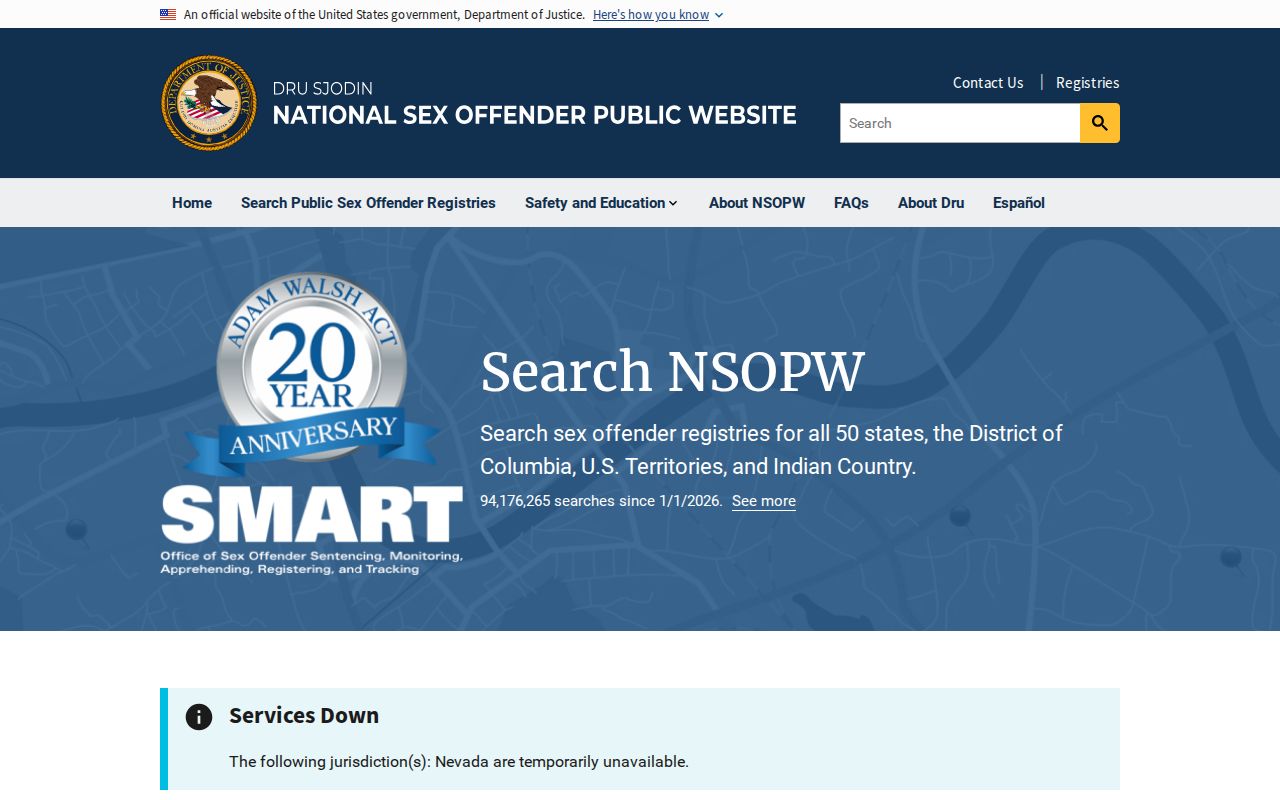
Its cross-state reach matters for Scott County communities close to the Virginia and Tennessee boundary.
Run both searches with the same name or geographic facts, then confirm a changing address or status through the jurisdiction that maintains the profile. Different states can publish different fields under their own laws.
Registry Profiles: What They Show
A public Scott County registry profile organizes identity, location, qualifying offense, and registration status. Read each part on its own. Tier is an offense-based statutory category, not an individual forecast of future conduct. A compliance label concerns registration duties and should not be treated as a new conviction unless an official court record says so.
| Name and aliases | Published identity names that may help distinguish similar results. |
|---|---|
| Photo and description | May include sex, race, height, weight, hair, eyes, and identifying marks. |
| Registered address | The location published under Virginia law, subject to change and verification. |
| Offense and conviction | Shows the qualifying offense, statute, date, and jurisdiction when public. |
| Tier | The statutory offense category that drives duties, not a personal risk score. |
| Registration status | Reports the status or compliance information made public by VSP. |
| Other published facts | May include vehicle, school, or work information when the statute permits. |
A profile does not supply a full Scott County court file. For the exact judgment or sentence, use the court clerk and case docket.
Scott County Registry and Custody Records
A registry profile should not be confused with custody or a national identity-history file. VADOC's locator covers people in state institutions and supervision, while the federal Bureau of Prisons locator covers federal custody. The FBI Identity History Summary is a fingerprint-based national record that a person requests for themselves. None of these channels replaces the VSP registry.
The FBI electronic identity-history portal shows the self-review workflow.
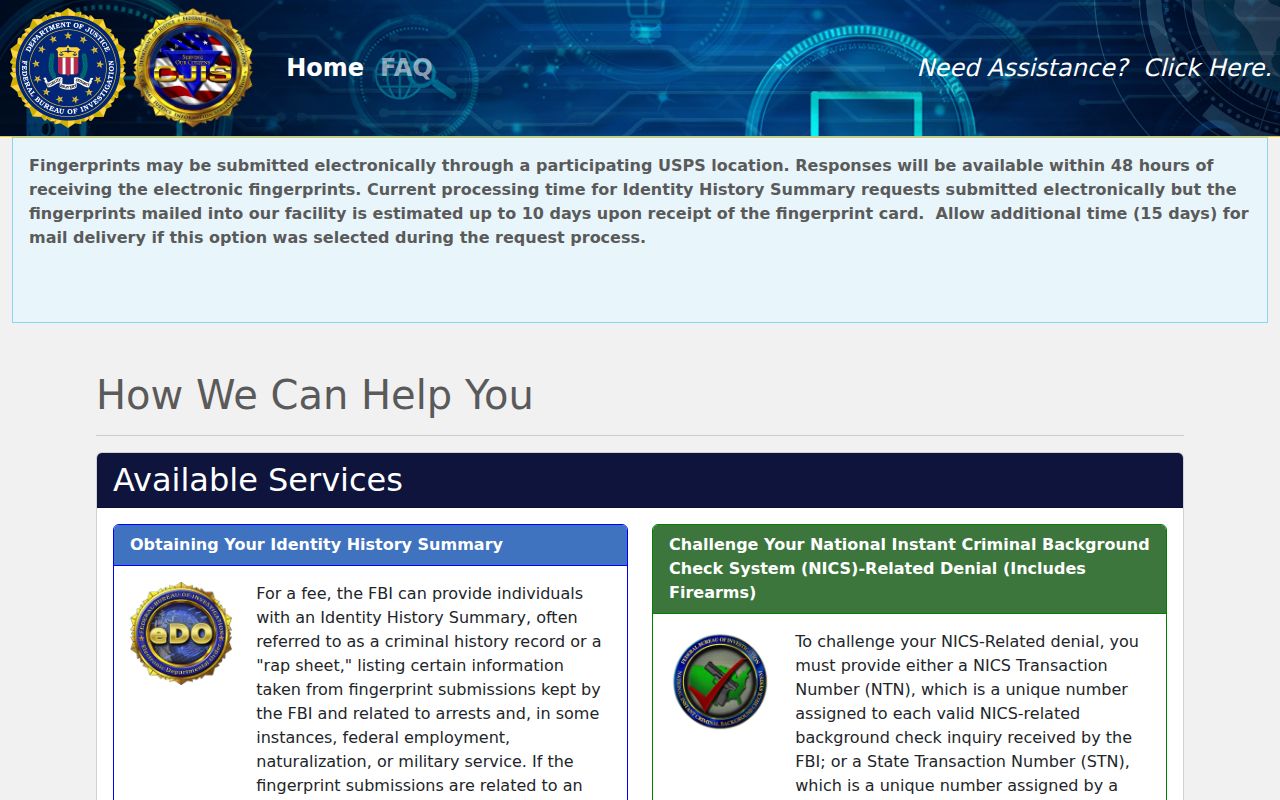
It answers a different question from a public Scott County registry search and requires the subject's fingerprints.
Federal Custody and Scott County Registry
A person connected to a federal case may appear in the federal custody locator rather than a Virginia jail or VADOC result. That custody status still does not answer whether a public Scott County registry profile exists, which jurisdiction maintains it, or whether the listed address has been verified.
The Federal Bureau of Prisons locator provides the federal custody layer.
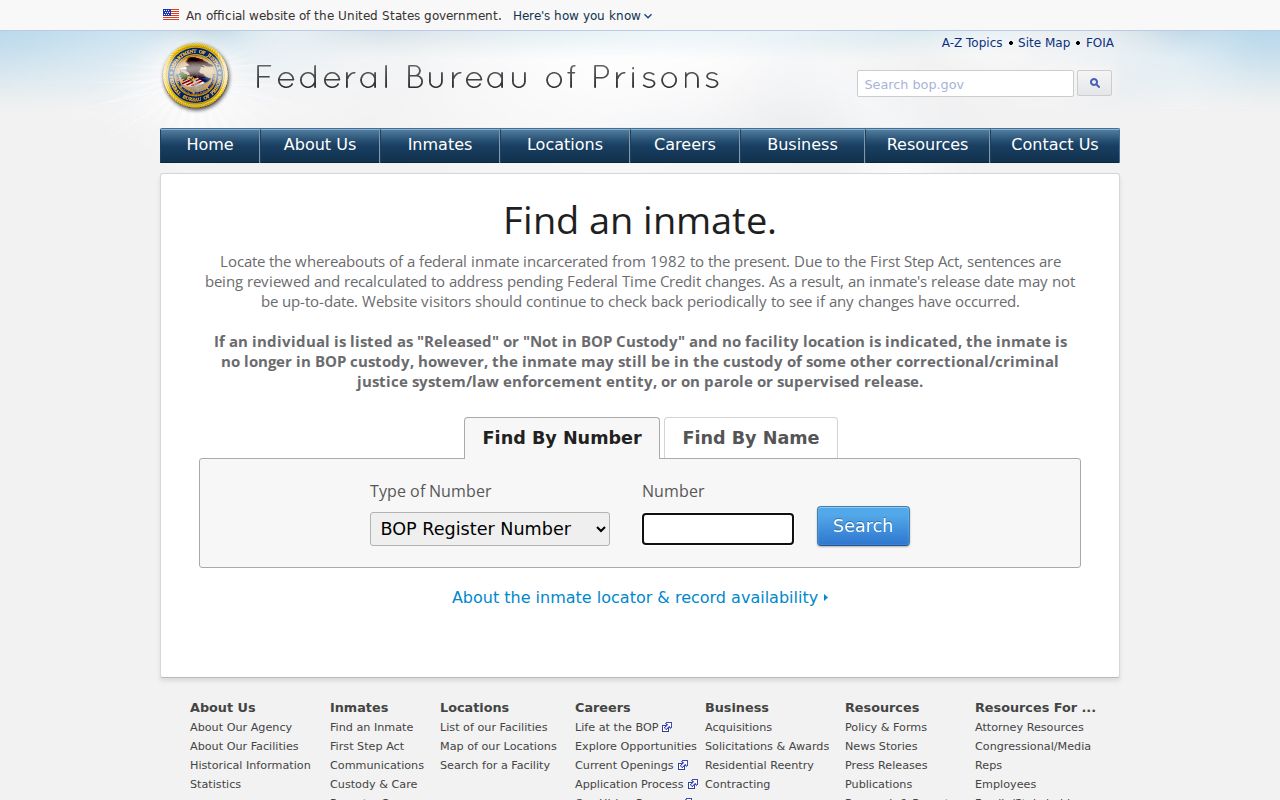
A federal custody result does not state current Virginia registration compliance. Return to VSP for the official registry profile and use NSOPW when another jurisdiction may maintain the record.
Registration Levels and Duties in Virginia
Virginia assigns registry tiers by enumerated offense rules. Current verification intervals are controlled by Virginia Code § 9.1-904, including amendments that must be read for the date in question. Duration is governed by § 9.1-908 and related petition provisions. Confinement tolls the otherwise applicable registration period.
| Level / Tier | Duration | Verification Frequency |
|---|---|---|
| Tier I | May be terminable by court after the applicable statutory period. | Follow the current § 9.1-904 interval. |
| Tier II | Longer statutory period, subject to current law and any court relief. | Follow the current § 9.1-904 interval. |
| Tier III | Lifetime under § 9.1-908 unless the statute or a court order controls otherwise. | Frequent verification under current § 9.1-904. |
Tier III, murder, and the identified former-offense category carry lifetime duties under the researched statute. Never turn a tier label into an unsupported claim about a person's present risk.
Tier I or Tier II treatment can involve statutory periods and court relief under current law, so an old summary may be wrong after an amendment. Verification duties also changed through 2025 legislation. Read the effective text for the date at issue and rely on VSP or a court order for an individual status.
Verify Scott County Registry Changes
Addresses, vehicles, status, and other published details can change. A profile is a point-in-time public record, not a promise that every field remains current. Call the VSP registry line or Scott County Sheriff when a fact needs official verification. Suspected noncompliance belongs with law enforcement, not a direct confrontation.
The VADOC supervision system is another distinct source. Its current locator includes some probationers and parolees, but supervision does not itself establish registry status. The VADOC probation and parole page explains that separate system.
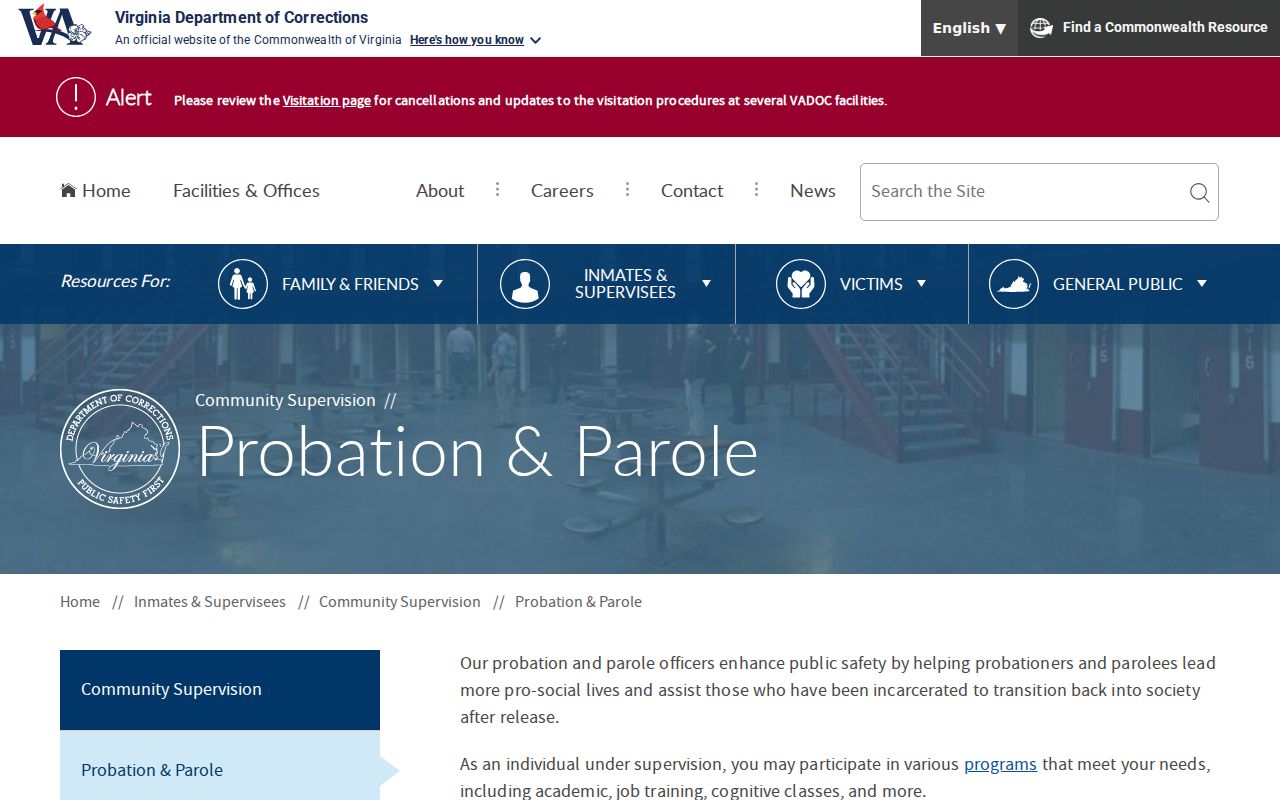
Use it only when state supervision is the question; confirm registry duties through VSP and Scott County law enforcement.
Using Registry Information Lawfully
The registry exists for public safety and community awareness. It can help a family understand nearby published records or check a known name. It does not authorize trespass, threats, intimidation, vigilantism, or harassment. Virginia Code § 9.1-912 governs public dissemination and restricts misuse.
Registry misuse is unlawful: Using Virginia registry information to threaten, intimidate, or harass can create criminal or civil consequences under § 9.1-912.
Report an immediate threat to 911. Give non-emergency compliance information to Scott County Sheriff or VSP. A profile should never become a public accusation beyond the facts the official record actually states.
Report Scott County Registry Noncompliance
When an address or status appears wrong, save the official profile URL or identifying record facts and contact law enforcement. Do not visit the address, question neighbors, or contact the listed person. VSP's public registry line is (804) 674-2825. Scott County Sheriff's office line is (276) 386-7679.
Explain the observed issue without adding guesses. Law enforcement can compare the public display with registration records and determine whether follow-up is needed. For a nearby Tennessee address, use NSOPW to identify the maintaining jurisdiction, then report through that jurisdiction's official channel.
Keep the report tied to observable facts, such as a profile field and the date it was viewed. A missing or changed map marker can have more than one cause. Scott County officers and VSP have access to the compliance process and can decide whether the information warrants an inquiry.